Saturday, 17 October 2026 Time: 18:00 Total duration: approximately 3 hours.
Free admission. Registration is required and opens three weeks before the event: zapisy@centrumdialogu.com The meeting and the open discussion in a circle are the two parts of the event. Separate registration is required for each part – when registering, please indicate whether you wish to participate in one part or both. Number of spots: 30. Spots are assigned on a first-come, first-served basis. If there are still spots available after the first part, you will be able to join the discussion in a circle. The event will take place in a hybrid format: Michael Sfard will join online, while the moderators and audience will be present at the Marek Edelman Dialogue Center.
Wall and gate. Human rights in a world full of violence | meeting + conversation circle
What?
Can the law be an effective tool for protecting people when violence becomes part of everyday life? What can a lawyer do when the state whose legal system they work within is itself a party to the conflict? And where are the limits of what the law can achieve in the face of violence and violations of civilians’ rights?
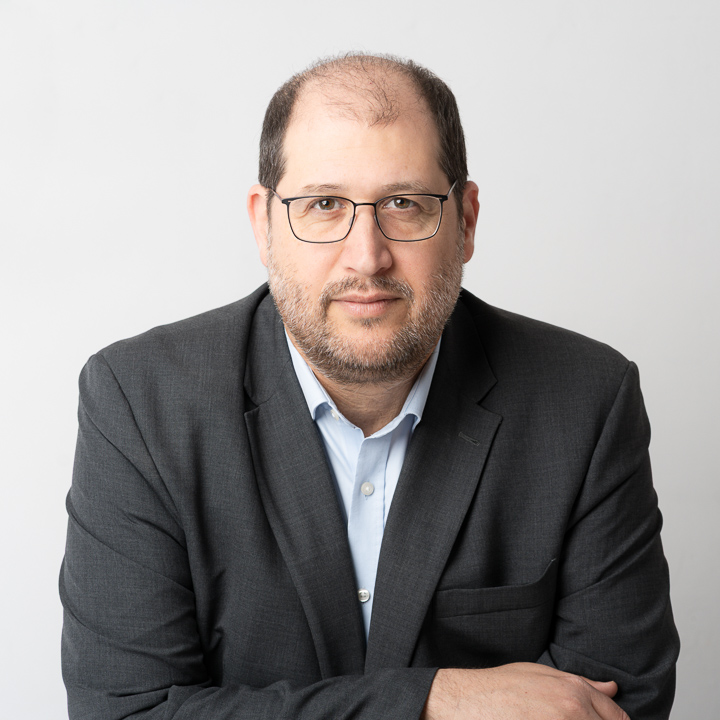
Our guest will be Michael Sfard – an Israeli lawyer specialising in international and humanitarian law and one of Israel’s best-known human rights lawyers. Over the years, Sfard has represented Israeli humanitarian and human rights organisations and has appeared before the Israeli Supreme Court in cases concerning, among other issues, the construction of the separation barrier, land confiscation, and violations of civilians’ rights. He is the author of The Wall and the Gate: Israel, Palestine, and the Legal Battle for Human Rights, a book about the legal struggle for human rights in Israel and Palestine.
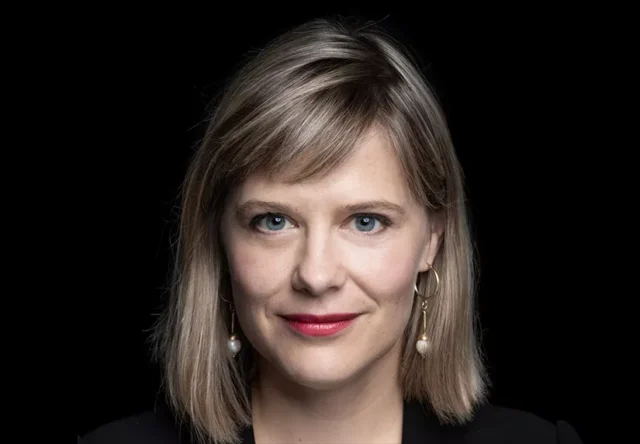
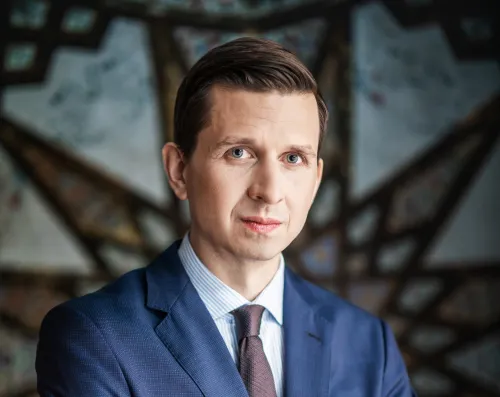
Michael Sfard will join the audience online. At the Marek Edelman Dialogue Center, the discussion will be moderated by Dr Dominika Blachnicka-Ciacek, a sociologist whose research includes the Palestinian diaspora, and Marek Matusiak, coordinator of the “Israel and the Gulf” project at the Centre for Eastern Studies (OSW).
After the event and a short break, we will invite the audience to join an open conversation circle. It will be a space to share thoughts and emotions prompted by the discussion, as well as to listen to the experiences and perspectives of others. Facilitators from the New Community Foundation will guide the conversation and help create an atmosphere of solidarity and respect for different perspectives.
Who?
Michael Sfard – an Israeli lawyer born in Jerusalem in 1972, specialising in international and humanitarian law. He has advised numerous Israeli humanitarian and human rights organisations. He is the grandson of writer Janina Bauman and sociologist Zygmunt Bauman, and the author of The Wall and the Gate: Israel, Palestine, and the Legal Battle for Human Rights.
Dominika Blachnicka-Ciacek – a sociologist, visual researcher, and Assistant Professor at the Department of Social Anthropology, Ethnic and Migration Studies at the University of Warsaw. Her research focuses on the affective dimensions of mobility, the lives of refugee and migrant communities – with particular emphasis on the Palestinian diaspora – and the relationships between diasporas and their countries of origin.
Marek Matusiak – coordinator of the “Israel and the Gulf” project at the Centre for Eastern Studies (OSW). He studied sociology at the University of Warsaw and human rights law at İstanbul Bilgi University. He has worked at Polish diplomatic missions in Tbilisi and Istanbul. His writing has appeared in publications including Tygodnik Powszechny and Kultura Liberalna.
nity Foundation – an organisation working since 2020 to bridge divides and strengthen a sense of community in Poland. Its activities include Community Dialogues, Good Conversation Training, and Local Conversation Courses.
For Whom?
The event is aimed primarily at those interested in human rights, international and humanitarian law, the social and political situation in Israel and Palestine, and the protection of civilian populations.
Given the subject of the event, participants should be prepared to engage with difficult and emotionally charged issues. This is particularly important during the second part of the event – the open conversation circle, which will be based on listening to one another and respecting different experiences and points of view.
Why is it worth it?
Conversations about Israel and Palestine can easily turn into debates about which side to take. Our meeting with Michael Sfard offers a different perspective, asking what happens to the universal idea of human rights when it comes up against the realities of politics, violence, and unequal power.
Sfard’s professional background makes this question particularly compelling. As an Israeli lawyer, he works within his own country’s institutions to take on cases involving issues such as the separation barrier, land confiscation, and the rights of civilians. From this perspective, the law becomes both part of the existing system and a potential means of challenging it.
The meeting therefore invites us to ask not only whether the law works, but also where its effectiveness ends – and what remains when legal mechanisms of protection prove insufficient.
This conversation is also important in the context of the Łódź of Many Cultures Festival. If multiculturalism is to mean more than simply different traditions existing side by side, it must also involve asking about the conditions that make such coexistence possible – equality, safety, individual rights, and the ability to have one’s voice heard. A conversation about human rights is therefore also a conversation about the principles on which a community can be built.
This is why the event does not end with the experts’ discussion. The open conversation circle shifts the focus from knowledge to the practice of dialogue, creating a space where people can remain in conversation despite differences in experience, perspectives, and emotions.
Availability
The event takes place at the Dialogue Center in the theater and cinema hall, which is equipped with an induction loop. The Dialogue Center building is accessible to people with mobility impairments. It has wide, non-automatic entrance doors, an accessible restroom, and an elevator. The theater hall is located on the ground floor and has a ramp; the auditorium includes spaces for people in wheelchairs. There is a large parking lot in front of the building with designated parking spaces for people with disabilities. Assistance dogs and guide dogs are permitted inside the building and the auditorium. The building is equipped with the ToTuPoint audio navigation system. The entrance to the parking lot is on Wojska Polskiego Street. Nearby are the following bus and tram stops: Wojska Polskiego/Centrum Dialogu and Wojska Polskiego/Sporna.
Photos
Michael Sfard photo Nicky Westphal, press mat
Marek Matusiak, press mat
Dominika Blachnicka-Ciacek, press mat