


22nd October, time 10:00
Registration for Academy of Fine Arts students opens three weeks before the event: zapisy@centrumdialogu.com
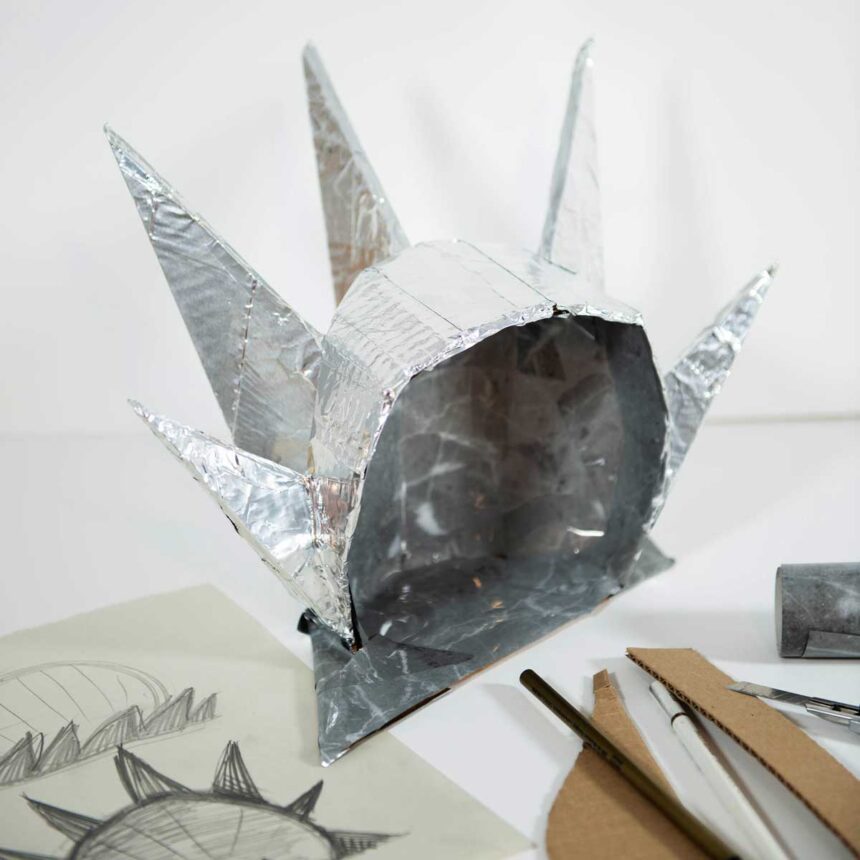
Designing small monumental sculptural forms | masterclass for Academy of Fine Arts students
What?
Who and what do we choose to commemorate? Who decides which people, events, and values deserve a monument? And what should we do with monuments when the political and social context in which they were created changes – preserve them, transform them, or perhaps tear them down?
These questions will provide the starting point for an artistic residency by Ali Savashevich, a Belarusian artist living and working in Wrocław. In her practice, Savashevich explores collective and personal memory, trauma, and the ways identity is constructed in societies shaped by authoritarianism and patriarchy. During the residency, she will initiate a collaborative process of reflection on the politics of memory and the role of monuments in public space.
As part of the residency, participants will explore how the form, scale, and location of a sculpture shape the way it is perceived, before creating their own objects from cardboard and other simple materials. The starting point will be the question of what we ourselves would like to commemorate today and how these ideas can be expressed through sculpture.
works created during the workshop will then be presented to the Festival audience at the Dialogue Center. The residency therefore goes beyond the artist’s work with a closed group – its outcome becomes an invitation to a broader conversation about whom and what we choose to commemorate with monuments.
The residency is connected to the exhibition On the Edge of Chaos. Ali Savashevich’s sculpture Unknown can be seen at the Central Museum of Textiles in Łódź as part of the exhibition from 18 September 2026 to 4 April 2027.
Who?
Ala Savashevich – a Belarusian artist living and working in Wrocław. She studied at the Belarusian State Academy of Arts in Minsk and the Academy of Fine Arts in Wrocław. Since 2021, she has been a doctoral student at the Academy of Fine Arts in Kraków.
In her practice, she explores collective and personal memory, trauma, and the processes through which identity is shaped in societies marked by authoritarianism and patriarchy. Her work places particular emphasis on women’s labour and the female body. Working across a range of media – from monumental forms and video to performance – she also explores the potential of the body as a means of expression and resistance.
W 2021 roku otrzymała Nagrodę Fundacji Sztuki Polskiej ING podczas Warsaw Gallery Weekend. W 2024 była nominowana do Paszportów „Polityki”, a w 2025 została laureatką Nagrody Sztuki im. Marii Anto i Elsy von Freytag-Loringhoven oraz Wrocławskiej Nagrody Artystycznej w kategorii Sztuki Wizualne.
For Whom?
The workshop is aimed at people aged 18–26, particularly students of the Academy of Fine Arts in Łódź. It offers an opportunity to experiment with the very idea of monumentality and to consider whether it comes from the size of an object or rather from the meaning we give it.
The public presentation of the works created during the workshop is open to the Festival audience and may be of interest to anyone curious about how young people today think about memory, history, and the need to commemorate.
Why is it worth it?
Monuments are never neutral elements of the urban landscape. They reveal not only what a community remembers, but also what it considers worth remembering – and whom it gives the right to represent its history. This is why political change so often leads to disputes over monuments – whether they should be torn down, removed, relocated, or given new meanings.
In the case of Ala Savashevich, this question takes on particular significance. Her practice grows out of a reflection on the memory of societies shaped by authoritarianism and patriarchy, and on the ways collective history becomes inscribed in individual experience and the body. Monumenting, however, shifts the focus from analysing existing monuments to the possibility of creating new ones. Rather than asking only which monuments should be preserved or torn down, participants are faced with a more fundamental question: what do we ourselves consider worthy of commemoration today?
This is particularly relevant in the context of the Łódź of Many Cultures Festival. Collective memory is not made up of a single narrative, just as a city does not have a single history. It is shaped by the experiences of different groups, generations, and communities – including those whose presence has long been absent from official narratives.
Designing a monument therefore becomes an exercise in social imagination: an opportunity to consider what public space might look like if we could decide anew whose stories and which values should be made visible within it.
The paradox of the “small-scale monumental form” also challenges the very logic of the monument. Monumentality does not have to mean size, weight, or permanence. It can come from the meaning, symbolism, and story we want to convey.
Partner
Central Museum of Textiles in Łódź
Availability
The event will take place in the meeting room on the first floor of the Marek Edelman Dialogue Center in Łódź.
The Dialogue Center building is accessible to people with mobility impairments. It has wide, non-automatic entrance doors, an accessible restroom, and an elevator. The theater is located on the ground floor, has a ramp, and the auditorium includes spaces for people in wheelchairs. In front of the building, there is a large parking lot with designated spaces for people with disabilities. Assistance dogs and guide dogs are welcome both inside the building and in the auditorium. The building is equipped with the ToTuPoint audio navigation system. The entrance to the parking lot is on Wojska Polskiego Street. Nearby bus and tram stops include: Wojska Polskiego/Centrum Dialogu and Wojska Polskiego/Sporna.